
Tyre Markings
How to read the size and the label of your tyres.
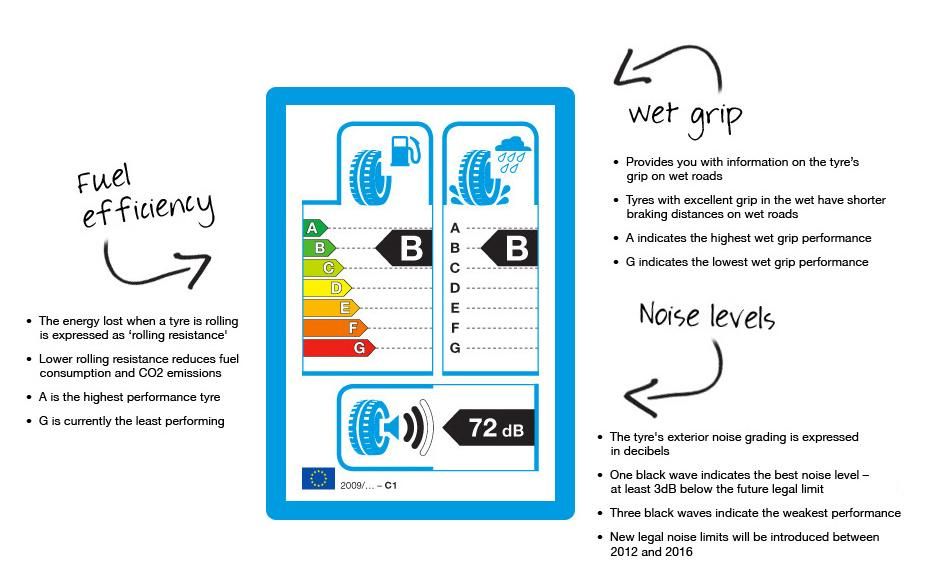
The tyre label
Every new car and van tyre has a label that rates it for three things. In Great Britain the ratings run from A, the best, to G.
- Fuel efficiency. A tyre with a lower rolling resistance uses less fuel.
- Wet grip. A tyre with a better rating stops in a shorter distance on a wet road.
- Noise. The noise of the tyre outside the car, in decibels.
How to read your tyre size
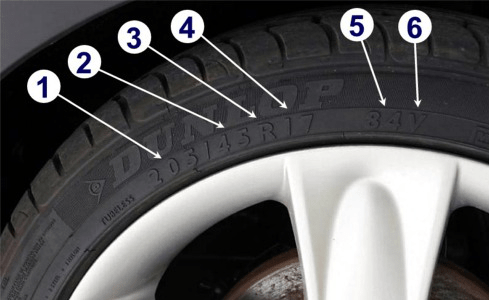
The size of your tyre is on its side wall, in a form such as 205/55 R16 91V. The numbers on the picture show each part.
- The width of the tyre in millimetres (205)
- The height of the side wall, as a percentage of the width (55)
- The construction of the tyre. R is radial, as almost all car tyres are
- The diameter of the wheel rim in inches (16)
- The load index: the weight that the tyre can carry (91 is 615 kg)
- The speed rating: the highest speed for the tyre (V is 149 mph)
You can also find the tyre size in your vehicle handbook. A new tyre should have a load index and a speed rating that are not lower than the ones that the manufacturer of your car or van specifies.
Common speed ratings
| Letter | Highest speed |
|---|---|
| T | 118 mph |
| H | 130 mph |
| V | 149 mph |
| W | 168 mph |
| Y | 186 mph |
How old is the tyre?
The side wall also shows when the tyre was made: four numbers after the letters DOT. The first two are the week and the last two are the year, so 2319 is week 23 of 2019.
Not sure of your tyre size?
Enter your registration number in our online booking, or call us.